
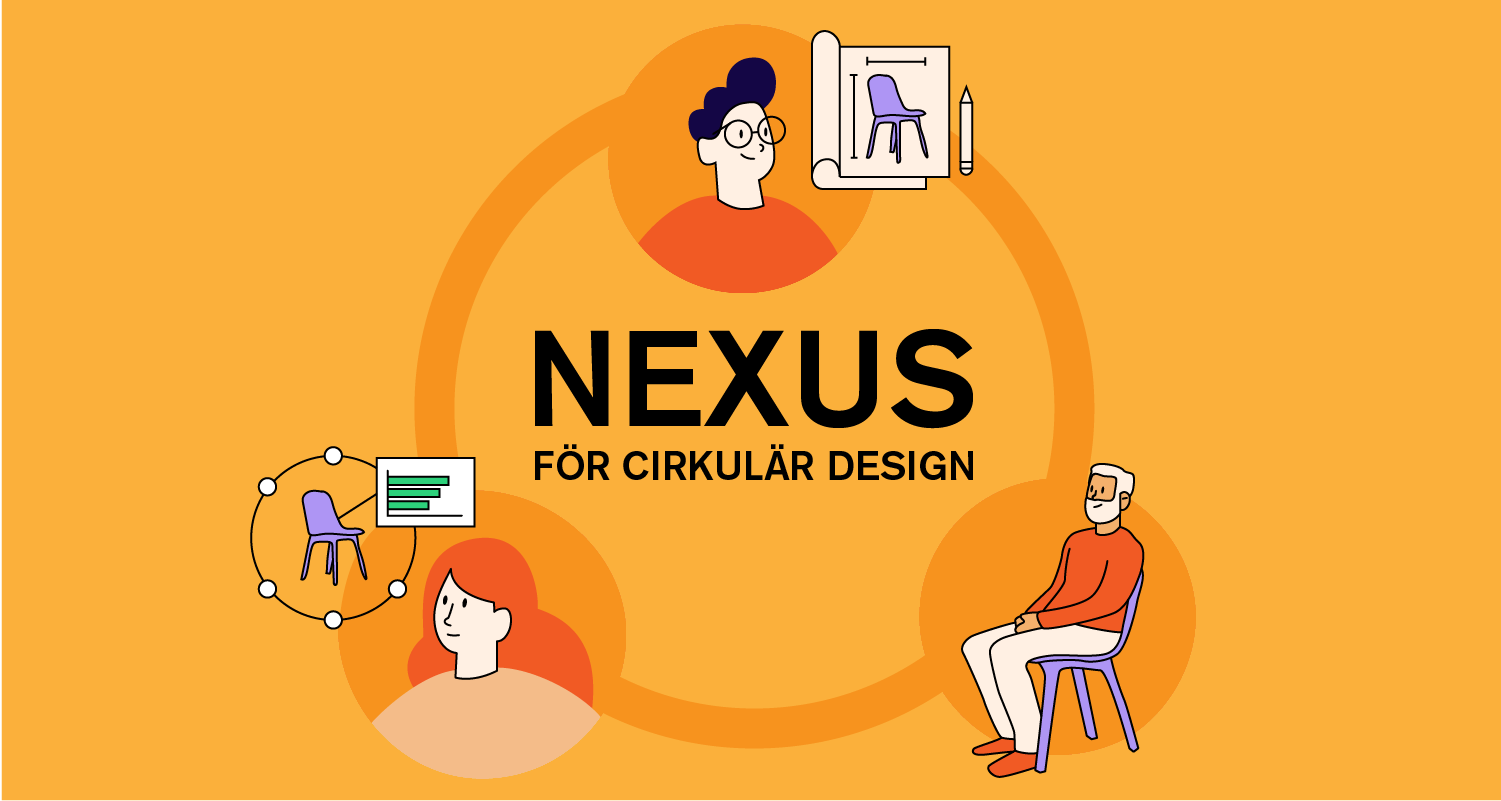
Circular design nexus: Converging Sustainable Product development, User Behavior, and Environmental impact
Year: 2024 - 2025
Funder: Energimyndigheten
Partners: Chalmers
How do people’s habits and decisions affect a product's resource efficiency and environmental impact, and how can this be considered during the design and development of products? This is what the project Circular design nexus investigates. The project combines sustainable product development, sustainability assessment, and user-centered design.
How resource-efficient and environmentally friendly a product is depends, among other things, on decisions made during the design stage. This includes decisions such as what materials and how much of them will be used, and what type of energy will be used in the manufacturing process. However, resource use is also governed by the design of the product, which connects to how the user handles the product and makes decisions in everyday life. In general, product development processes lack an integration of socio-ecological sustainability perspectives. Sustainability-related consequences can be difficult to foresee in early development phases when the primary focus is on meeting user needs, which may lead to unnoticed and undesirable effects later on when they become costly or irreversible. Based on previous research, there is still a lack of capabilities and tools for how product development teams in companies can anticipate users’ behavior from a sustainability perspective when the product is managed in a circular manner, and thereby be able to steer users’ behavior in a more sustainable direction.
Aim
With the Nexus for Circular Design project, the aim is to understand the need for new capabilities and tools for how product development teams in companies will be able to anticipate users’ behavior from a sustainability perspective when the product is managed in a circular manner, and thereby be able to steer users’ behavior in a more sustainable direction. The project objective is to build a research network and larger project, connecting three disciplines: sustainable product development, sustainability assessment, and user-centered design, to address the need to:
Gain knowledge on how user behavior affects a product’s resource efficiency and environmental impact, and thereby take this into account in product development and design
Integrate capabilities and processes to promote sustainable behavior into existing product development processes